Apps, systems & experiments · Entirely AI-built

10 seconds.
It's not about how long you last,
it's about how fast you ship.
I'm Eytan, and this is my story with AI.

Turns out "I can't code" was just an excuse. AI called the bluff.

See what got built ↓
~/projects
$ think "I have an idea. How hard can it be."
🧠 Processing 25 years of watching developers... done.
⚡ Skipping the part where you learn to code...
📱 Building anyway, somehow, with Claude...
✅ Shipped. Already annoyed by the next problem.
$ █

I managed developers for 25 years.
I never once touched the code.

I was the one in the meeting asking how long it would take. Then asking why it took longer.

Then AI started writing code for anyone who could explain what they wanted. Explaining what I want turned out to be the one skill 25 years of management gave me.

So now I build fixes for the things I keep tripping over. The sixteen cards below are what came out.

Some of them are even finished.

Every one of these. Zero prior coding experience.

None of these took a year. That's the whole point. When building goes a hundred times faster, an MVP stops being a compromise and becomes the quickest way to find out what your product actually is — and whether the world agrees. Time isn't the constraint anymore. Knowing what to build is.

GRID game in play: a puck flies up a dark grid between an orange and a cyan wall, two more pucks waiting below Live · play now
Web · Two players, one screen

GRID

A slingshot duel for two people sharing one phone.

Problem
Does one rule, pass before you shoot, plus a wall each, make a two-player phone game fun? I built it to find out.
Architecture
Physics and rules live apart from the drawing, so the game can be tested without a screen. No accounts, no network, nothing saved.
Technology
Plain JavaScript and Canvas 2D in one web page. No build step, no dependencies. 67 automated tests on the physics and rules.
Logic
Fire a puck between the other two to arm your shot; a goal counts only when armed. One wall each, which you can move or remove. First to three.
UB Lumina home page: a glowing glass lamp on a chrome stem, marked sold, beside the headline Light as a piece Live
Web · Gallery of one-off lamps

UB Lumina

Every lamp exists exactly once. Online shops assume stock, so this is a gallery.

Problem
A friend rebuilds vintage glass shades on industrial bodies. He wanted enquiries, not a shop: no cart, no checkout.
Architecture
One template renders every lamp's page, in English and Hebrew. Public pages are built from a sealed release list, never the live database.
Technology
Next.js exported as static pages on Firebase Hosting. An owner-only Studio edits the catalogue, backed by Firestore and Cloud Run services.
Logic
What isn't known stays blank: no invented age, origin or size. A lamp without a photo isn't shown; 38 are.
MeetAI page header: the app name beside a microphone icon, a short pitch and a See how it works button Built · not in the store
iOS · Meeting notes, transcribed live

MeetAI

Meetings evaporate when you leave the room. This writes them down as you talk.

Problem
Meetings and site walkthroughs end with tasks and decisions that nobody wrote down.
Architecture
Sessions, transcripts and results stay in a database on the phone. The organise step sends the transcript to Claude.
Technology
React Native with Expo, iPhone only. Live speech recognition, SQLite on the device, Claude's API with a key kept on the phone.
Logic
Claude sorts the transcript into tasks, ideas, issues and decisions, and who promised what. A multi-user version is built but parked.

Runs only in the iPhone simulator on my Mac.

Tora finance platform, sample figures: financing overview with scenario switches, a side menu and four metric tiles Private tool
Web · Private finance platform

Tora

One financial model. The bank reads coverage, the investor reads returns.

Problem
The business plan lived in an Excel workbook. I wanted every assumption editable live, with the answer recomputed at once.
Architecture
One engine runs a 17-year, month-by-month model in the browser. An admin view edits the inputs; a read-only investor view presents the results.
Technology
A TypeScript engine with no dependencies, inside a Next.js site exported as static files to Firebase Hosting. Edits are kept in the browser.
Logic
Change any input and the model recomputes at once. Four presets: base, no grant, conservative, upside. Engine changes get an AI finance check.

Platform shown with sample figures. The link opens its entry page.

Tora brand site hero: an infinity pool above the sea, two people and the Tora wordmark Live · pre-launch site
Web · Bilingual brand site

Tora Website

The villas open in 2029. Until then, the site carries the idea.

Problem
Private villas and creative retreats in Saint George, Antiparos, not built yet. The site has to explain the idea, the stay and the investment.
Architecture
One long page: the idea, Villa Lev as its proof of concept, the stay, and how to invest.
Technology
A single web page with an English/Greek switch. Enquiries go by email link; there's no form and no booking.
Logic
It promises an opening date, not availability. Invest and Enquire both end in an email.

Nothing to stay in yet. Hidden from search engines.

Villa Lev Website front page: One private house for families and friends, over a terrace looking out to sea Live · public site
Web · Public villa site

Villa Lev Website

A photos-first villa site where every claim traces back to a real source.

Problem
I want direct enquiries from US and shoulder-season guests. This site is built to replace the old Wix one.
Architecture
Ten pages, built ahead as static files. English first; five more languages show as not yet available, with no empty pages.
Technology
Astro and Tailwind on Firebase Hosting. Responsive images cut from real villa photos. Enquiries send through FormSubmit.
Logic
An enquiry, never a booking: no payment. The form reports success only when the sending service confirms it, then promises a personal reply.

Not yet on villalevantiparos.com, which still shows the old site.

Villa Lev Operations dashboard with sample data: season revenue, outstanding balances, occupancy and a side menu Private · Internal system
Web · Back office for one villa

Villa Lev Operations

Bookings, bank, supplier invoices and Greek VAT, finally in one place.

Problem
Bookings, bank, invoices and VAT needed manual spreadsheet work. The goal is one screen for every decision and none of that.
Architecture
One web app for two people: me, and the villa manager, who works from a phone. A separate read-only view is built for the accountant.
Technology
Next.js and Firebase: sign-in, database, hosting. Gemini, on the server, reads supplier invoices from Google Drive; nightly jobs refresh the figures.
Logic
Bank lines matched to Airbnb and Booking payouts; VAT pre-sorted for the accountant. A failed save says so, never ‘done’. It also tracks the wine.

Shown with sample figures. The Villa Lev website is its public side.

The Private Close sign-in screen: a padlock icon and a Continue with passkey button. No account data shown Private
Web · Runs on my own machine

The Private Close

Month-end close for my own money. It won't close until everything's explained.

Problem
I wanted to close my own month the way a company does: every balance accounted for, nothing left unexplained.
Architecture
One app on my own machine. It pulls in the real accounts and tracks balances and spend in a database.
Technology
Postgres with locked-down database roles. Proper login with a passkey. Encrypted backups every night.
Logic
The month stays open until everything is explained: every balance, all the spend. Only then does it close.

Runs on my own hardware, off the internet. By design.

Owl app design on a phone: a plain-language recovery forecast, with heart and rhythm status rows below In progress
iOS · Works with your watch

Owl

Your watch knows exactly how rough last night was. It just never says.

Problem
The big recovery trackers score your sleep. They don't read the night out, often the biggest swing in how you feel.
Architecture
Designed as one engine that compares your heart rate, sleep and temperature with your own normal. It uses the watch you already wear.
Technology
So far, a clickable prototype in plain HTML and JavaScript. By design, the reading happens on your phone, opt-in, with minimal data.
Logic
Headline first: one plain line on when you'll feel like yourself again, the detail below. Your data is for you, never for ads.

A design and a prototype exist; not shipped yet.

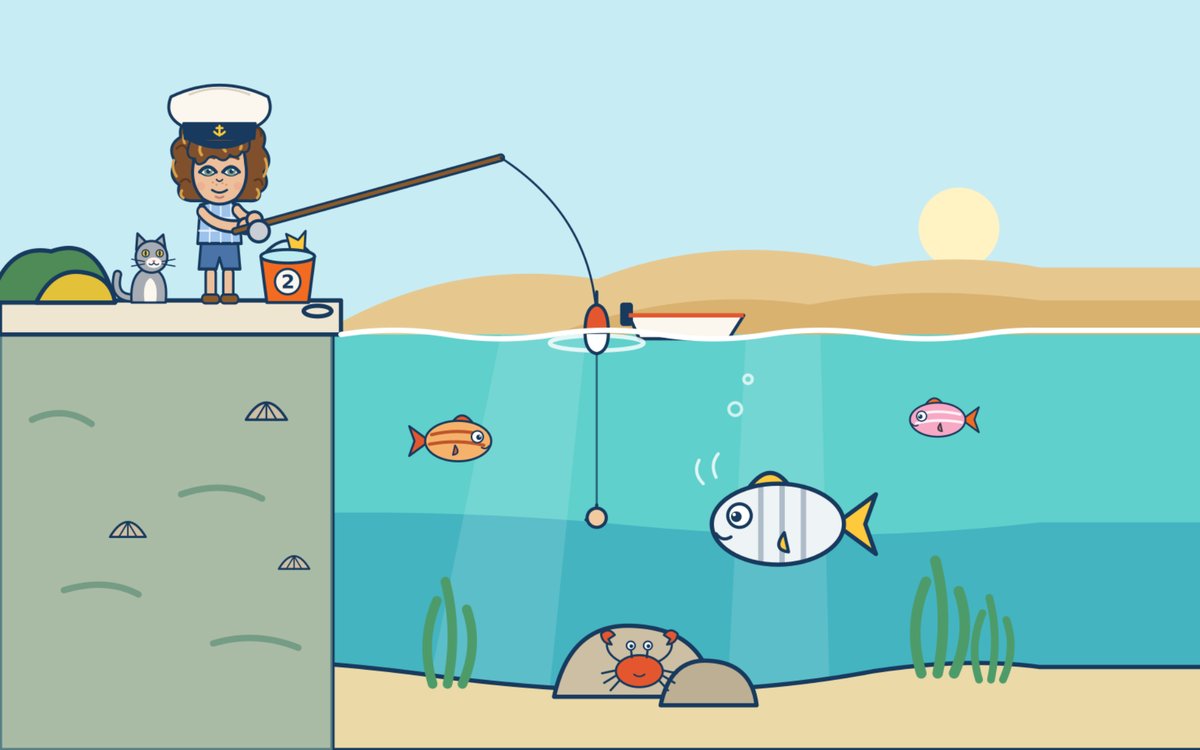
Captain Lev game: a cartoon boy in a captain's hat, a waving man and Picasso the cat beside a blue door with place pictures In progress · test build
Web · A game for one child

Captain Lev

A rock pool on Antiparos, for the days my son can't reach the sea.

Problem
Most games for small children run on reading, coins, ads and streaks. I wanted calm play where nothing can be lost.
Architecture
A short film, then one island day: the house, the dock, the rock pool, sunset, the walk home, the night. A locked screen for parents.
Technology
An installable web app that works offline. TypeScript and the Phaser game engine; the art drawn in code. No account, ads, analytics or network calls.
Logic
No reading: instructions are spoken and shown. Creatures act like real ones: a crab eats, looks up, darts. Picasso the cat leads by walking over.
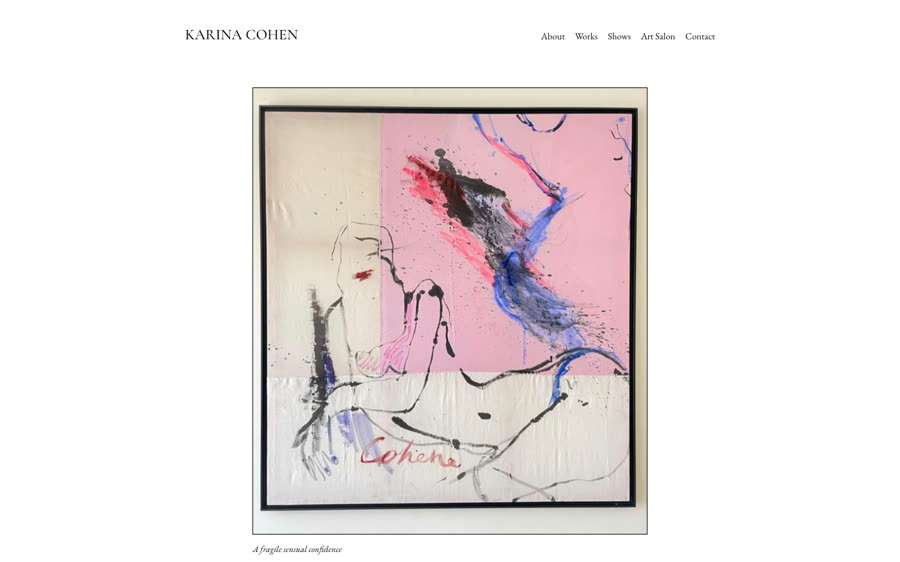
Karina Cohen artist website home page: a single framed abstract figure painting in pink, blue and black Live
Web · Artist website, Athens

Karina Cohen

The home page is one painting. Everything else waits a click away.

Problem
Karina Cohen is an artist in Athens. She needed a site where the work leads and her Art Salon follows.
Architecture
Six pages: home, works, shows, bio, Art Salon, contact. All the words live in one content file, apart from the layout.
Technology
Plain HTML, CSS and JavaScript: no framework, no database. Firebase Hosting. Each artwork image comes in several sizes for different screens.
Logic
Enquiry only: no prices, no cart. Messages go straight to her. No show or fact goes up without a source.
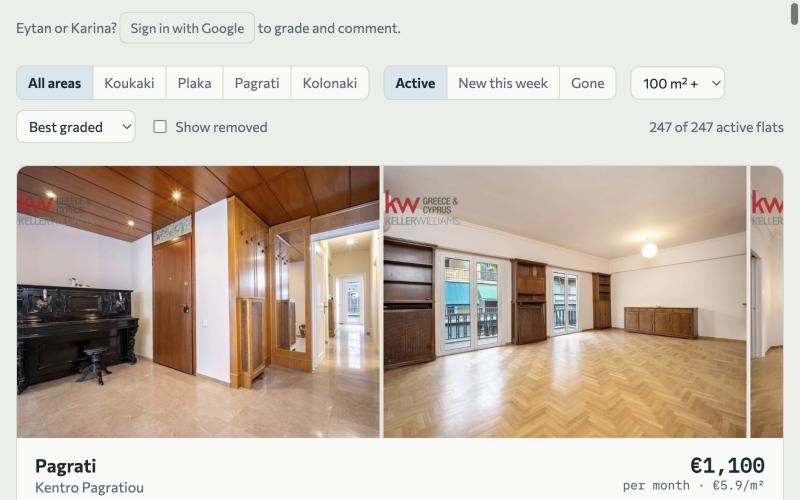
Family Flat Watch, Rent tab: two 160 m², 3-bedroom Kolonaki flats at €1,550 and €1,700 a month, with room photos Live · read-only
Web · A daily flat search

Family Flat Watch

Karina and I need a family flat in Athens. I stopped refreshing the portals.

Problem
The same flat appears on several portals under different agencies, and new ones land daily. Checking by hand didn't keep up.
Architecture
Three morning jobs: a search reads Athens portals, a second merges duplicate rentals by photo, a third copies the results to the page. Rent, Buy and Market views.
Technology
Claude reads the portals in Chrome on my Mac. Firebase holds the flats and the Google sign-in; its database rules decide who can write.
Logic
Every flat must meet the brief: area, size, bedrooms and, to rent, a long lease. Portals mis-tag areas, so it reads each description.

Grades are ours, shown read-only. Nothing here contacts agents.

Villa Lev Films still: a hand holds up a raw octopus beside a glowing pendant lamp Live · one film public
Video · Short films for phones

Villa Lev Films

The house writes the captions and swears nothing happens here. Every shot disagrees.

Problem
I wanted films that make people want to stay at the villa. The footage has no dialogue, and people often scroll muted.
Architecture
AI writers pitch premises and captions; an AI editor builds the cut. I watch each twice, sound off then on, and reply by row.
Technology
ffmpeg cuts, grades and exports; Python and Pillow draw the captions. A check script runs before I see a cut.
Logic
The captions set up the joke; the pictures deliver it. Cuts land on the music's beats. Every film ends on the same card.
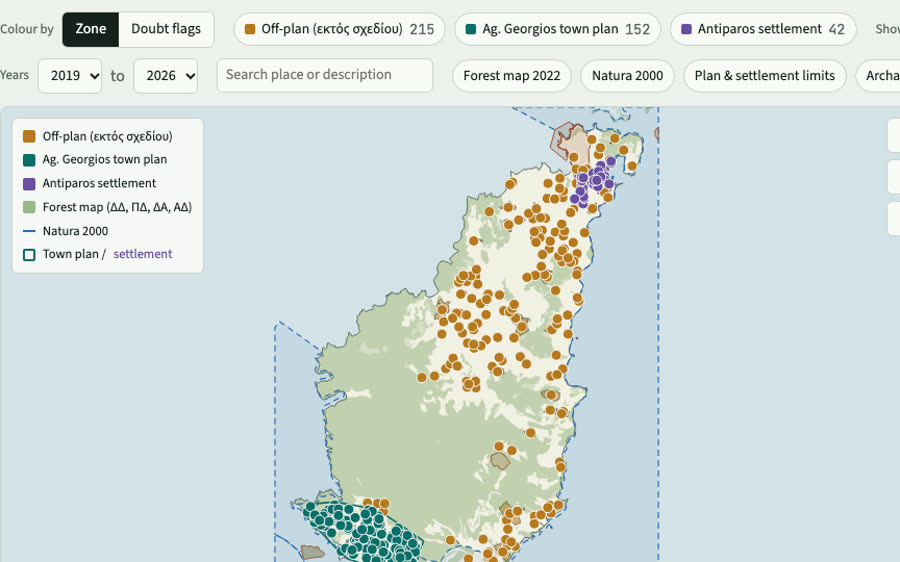
KANON test result for one plot: Proceed only if, with road, title and forest checks still unproven, beside a plot outline Private · test site
AI · Greek building law

KANON

A neighbour's 2021 permit may be unrepeatable today. KANON is built to tell which.

Problem
In Greece you rarely know what a plot allows until you've bought it. The rules stack in layers and keep changing.
Architecture
Building rules dated by when each took force, planning maps, and 409 approved permits, each weighed against the rules of its own date.
Technology
Python on a private test site with an approved sign-in list. Covers Antiparos and parts of Paros, in English and Greek.
Logic
Pick a plot: it shows what the rules allow, what isn't established, what's still open. 0 false go-aheads, 38 of 38 known answers right.

Our own tests. Not public; no engineer has confirmed the rules.

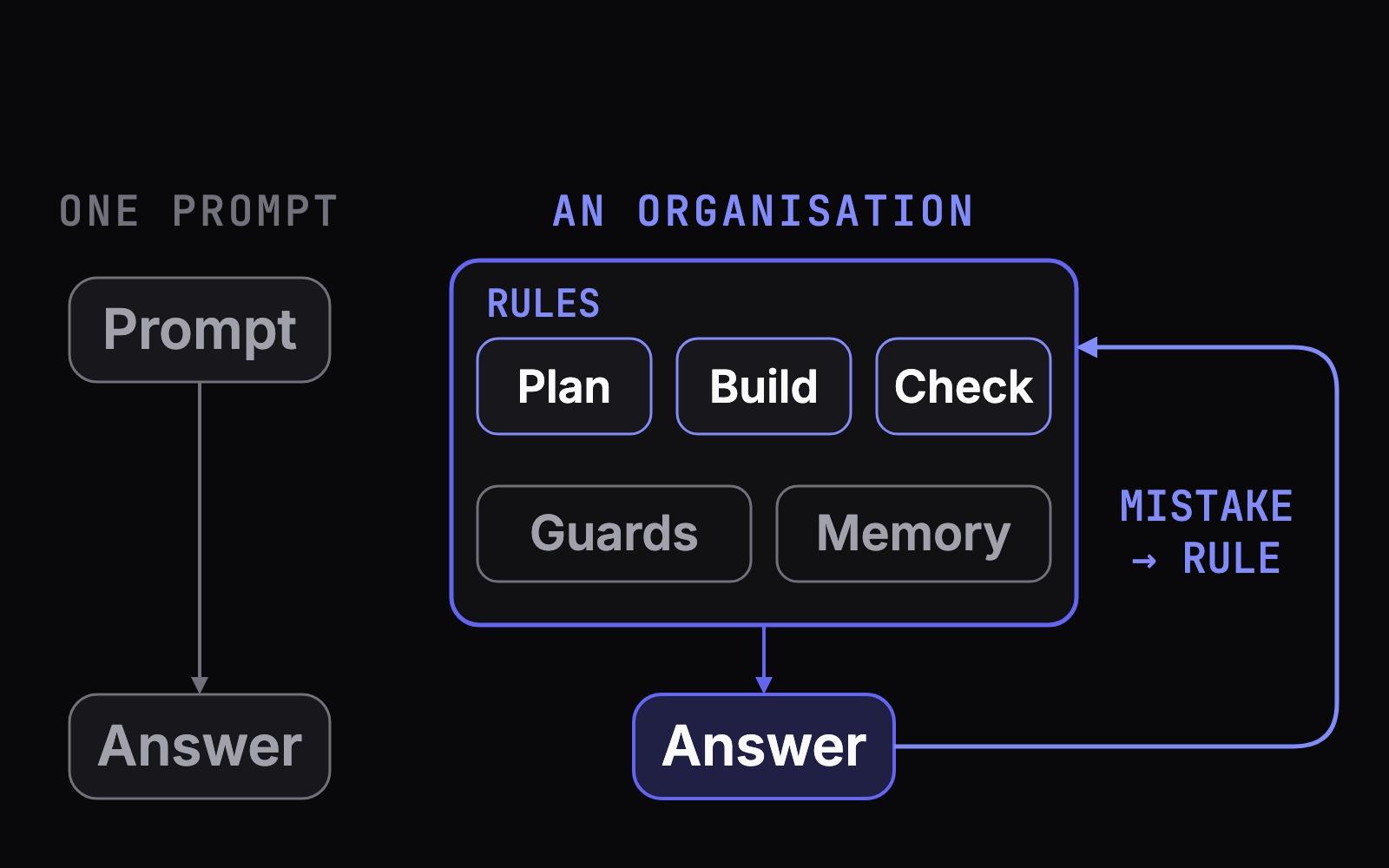
My AI Organisation diagram: one prompt, one answer, beside a team with rules, guards, memory and a mistake-to-rule loop In use · read the paper
Method · How I run AI

My AI Organisation

I run AI the way I ran developers for 25 years.

Problem
Every AI window started almost blank, and I kept correcting the same mistakes.
Architecture
Specialists say what to build, a builder builds, a checker can block a release. Underneath: one rulebook linked into all three assistants, one shared memory on my Mac, still being built.
Technology
Three AI assistants and a cheaper build model. Guard scripts that block, not ask. Plain-text memory with full history.
Logic
A mistake made twice becomes a rule: a script first, a written reminder last. Claude writes the spec and checks; a cheaper model may take routine builds. On this site, nothing goes live without a checker's pass and my written yes.

Cheaper-model pilot: no verdict, no saving proven. Rulebooks stay private.

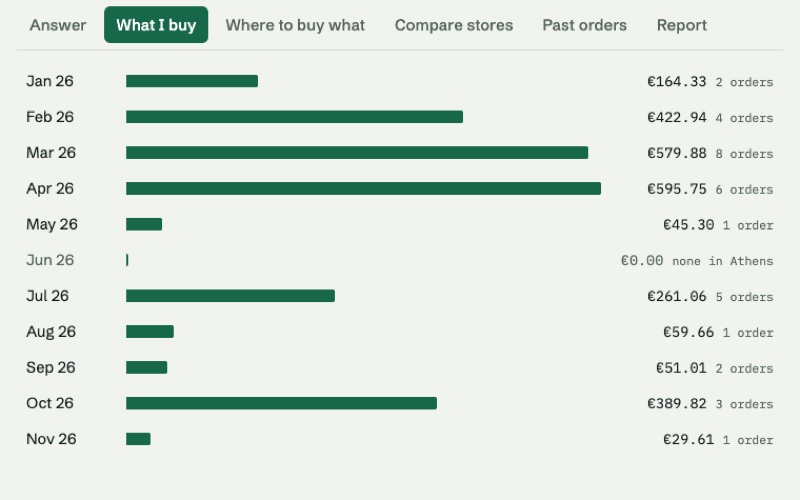
Wolt Optimizer, What I buy tab, sample figures: monthly grocery spend bars, Jan to Nov 2026, with order counts Private · sign-in only
Web · A private grocery check

Wolt Optimizer

Six supermarkets, one basket. Shopping around would save me about 30 cents a month.

Problem
Six Athens supermarkets deliver to me through Wolt. I wanted to know whether splitting my shopping between them would save €20 a month.
Architecture
Claude reads my Wolt receipts, 33 orders since January, and a script prices each basket in all six stores. Tabs show the answer, monthly spend and where to buy what.
Technology
Claude in Chrome reads prices off Wolt's store pages. Firebase holds the shopping data behind Google sign-in; its rules let only my account read it.
Logic
Most of what I buy is in one store only. Shared items differ by a median 3.4%, and each extra store adds a fee and a minimum.

Sign-in only: it holds my real shopping. Picture shows sample figures.

Open
Your idea · Let's build it

Got a problem?

A workflow that shouldn't exist? A spreadsheet held together with prayers? Send it over, and let's see if it ships in 10 seconds.